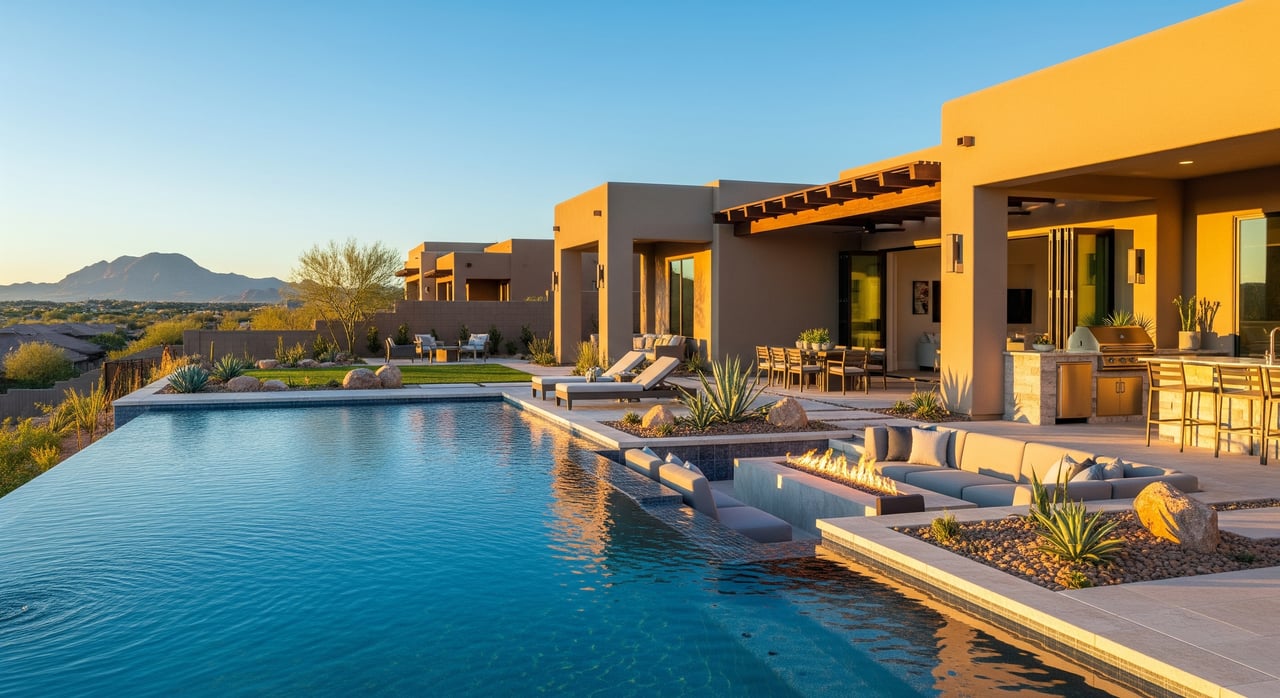
Thinking about buying or selling a home with a pool in Gilbert? In our desert climate, a pool can feel like a lifestyle upgrade, but it also comes with real costs, care needs, and resale considerations. You want the fun without surprises, and you want to know how a pool will affect your bottom line. This guide breaks down what to expect in Gilbert, from installation and upkeep to safety, permits, and value. Let’s dive in.
Why pool homes fit Gilbert living
Gilbert sits in the Phoenix metro’s desert climate, where summers are long and hot and winters are mild. Pools are common and often expected in many neighborhoods because you can use them much of the year. That said, heat and sun increase evaporation, chemical usage, and wear on surfaces and equipment.
HOAs may have rules about pool placement, barriers, and approvals. The Town of Gilbert requires permits and inspections for in-ground installations and enforces safety standards. Always confirm current rules with the Town of Gilbert Building Division, your HOA, and your insurer before you start work or list a home.
What a pool really costs in Gilbert
Costs vary by size, finish, features, and contractor quality. Local soil conditions and access can also affect bids. Here’s a practical overview to help you budget.
| Cost category | Typical range | What to know |
|---|---|---|
| Install – in-ground | $50,000–$100,000 for mid-range; basics from ~$40,000–$70,000; custom can exceed $100,000–$200,000 | Features, decking, and site prep drive price. |
| Annual maintenance | $600–$1,800 for pro service; DIY is less but takes time | Weekly care keeps water clear and equipment healthy. |
| Utilities | ~$300–$1,200/year for pump/filtration electricity; heating can be several hundred to thousands more if used often | Variable-speed pumps lower electric use. |
| Chemicals | ~$200–$800/year | Higher in peak summer due to heat and evaporation. |
| Repairs/parts | Budget ~$500–$2,000/year on average | Expect major equipment replacement every 7–15 years. |
| Resurfacing | ~$5,000–$15,000+ | Finish and pool size affect pricing. |
| Removal | Partial: ~$5,000–$20,000; Full: ~$15,000–$40,000+ | Access and disposal change costs. |
A few Gilbert-specific notes:
- High UV and heat increase chemical consumption and can accelerate wear on plaster and equipment.
- A variable-speed pump is one of the most cost-effective upgrades to reduce electricity use. LED lights and a quality cover also lower operating costs.
- Solar pool heating is popular locally. It has higher upfront costs but low operating costs and works well with our long sunny season.
Care and maintenance for the desert
A steady routine saves money and keeps your pool photo-ready for showings or move-in day. Use this simple checklist.
Weekly care
- Skim the surface, brush walls and steps, and vacuum as needed.
- Test and adjust sanitizer, pH, and alkalinity. Balance helps protect equipment and finishes.
- Empty skimmer and pump baskets so flow stays strong.
Monthly and seasonal tasks
- Clean or backwash filters and inspect for leaks.
- Test calcium hardness and cyanuric acid; shock if needed.
- Inspect heaters, lights, automation, and salt cells.
- Check deck, tile, and coping for cracks, scale, or loose areas.
- Verify barrier and gate latches function properly.
Water chemistry in dry heat
- Evaporation concentrates dissolved solids over time. Periodic partial drain-and-refill may be needed to keep total dissolved solids and cyanuric acid in range.
- Salt systems reduce manual chlorine handling but require cell inspections and eventual replacement.
Safety and conservation
- A safety or automatic cover reduces evaporation, chemical use, and heat loss while adding a safety layer. Many insurers favor safety features and may require certain barriers.
- LED lighting and efficient pumps reduce utility costs and can be a selling point.
Safety, permits, and insurance basics in Gilbert
In-ground installations typically require permits and inspections covering structure, electrical bonding and GFCI, plumbing, and barriers. Before you buy or list, verify that the pool and any major repairs were permitted and passed final inspections. Unpermitted work can complicate financing and delay closings.
Local codes and many HOAs require barriers with specific heights and self-closing, self-latching gates. If doors open into the pool area, some rules call for door alarms or other safety measures. Confirm requirements with the Town of Gilbert and your HOA.
Most insurers want pools disclosed on the policy and may require safety devices or higher liability limits. It is smart to compare policies and understand coverage before you make an offer.
Resale value: what to expect in Gilbert
In warm-climate markets like Phoenix metro, pools are often a net positive because they’re usable much of the year. The premium depends on neighborhood norms, pool condition, lot size, and buyer preferences. A well-maintained, modern pool with efficient equipment is more likely to add value than an older pool that needs work.
Appraisers rely on recent comparable sales. If similar nearby homes with pools sell for more, appraisers reflect that. There is no fixed percentage added for a pool, but in many hot-climate neighborhoods, owners see a measurable bump, often in the single-digit percentages. Results vary by subdivision and condition.
If demand for pools is weak in a particular area or the pool needs major repairs, you might see longer days on market or buyer requests for credits. Strategic pre-listing work can shift that equation in your favor.
Buyer checklist: evaluating a pool home in Gilbert
- Ask for pool service records, equipment receipts, and warranties.
- Confirm permit history with the Town of Gilbert Building Division; require closure of any open permits.
- Order a professional pool inspection to assess structure, equipment, and safety compliance.
- Verify barrier and fence compliance and, if applicable, proof of HOA approval.
- Estimate annual operating costs: electricity, water, chemicals, routine service, and equipment replacement.
- Check insurance availability and premiums with the pool disclosed on the policy.
- If you plan to remove the pool, get written removal estimates and factor that into your offer.
Seller checklist: protecting your pool home’s value
- Get a pre-listing pool inspection and fix safety or mechanical issues.
- Clean tile and finish, balance water, and clear any algae or scale.
- Repair visible deck cracks, replace worn pump or filter parts, and update lights to LED where sensible.
- Ensure fences and gates meet local and HOA requirements and work smoothly.
- Gather maintenance logs, receipts, permits, and warranties to share with buyers.
- Consider cost-effective upgrades buyers appreciate, like a variable-speed pump or a quality cover.
- Discuss with your agent how to position the pool in marketing and whether credits or allowances make sense for older finishes.
When pool removal makes sense
Not every buyer wants a pool. In some situations, offering a credit or exploring removal can open your buyer pool. Partial removal and backfill often run about $5,000–$20,000, while full removal and site restoration can reach $15,000–$40,000 or more. If you’re weighing this choice, get contractor quotes early so you can compare net proceeds and time-to-sale with your agent.
Local help you can count on
You deserve clear answers and a game plan tailored to your neighborhood. Whether you’re buying your first pool home or preparing to list, we help you verify permits, line up inspections, estimate costs, and negotiate smartly. We’ll also connect you with trusted local pool pros for repairs or upgrades so your investment holds its value.
Ready to plan your next move in Gilbert? Request a Free Home Valuation and talk strategy with The Holmes Team. We combine warm, family-focused service with strong negotiation and local expertise so you can move forward with confidence.
FAQs
How much does it cost to run a pool in Gilbert each year?
- Expect roughly $300–$1,200 for electricity, $200–$800 for chemicals, and $600–$1,800 for routine service if you hire a pro, with repairs averaging $500–$2,000 over time.
Do pools add value to homes in Gilbert’s desert climate?
- Often yes, especially in neighborhoods where pools are common and the pool is in good condition, but the premium varies by comps, condition, and buyer demand.
What permits and inspections should I verify for an existing pool in Gilbert?
- Check that the original installation and major repairs passed Town of Gilbert permits and final inspections, including structure, electrical bonding/GFCI, plumbing, and barriers.
What safety features are typically required for pools in Gilbert?
- Local codes and many HOAs require a compliant barrier with self-closing, self-latching gates; some homes may also need door alarms if doors open to the pool area.
How often will a pool need resurfacing in Phoenix-area conditions?
- Many plaster or pebble finishes need resurfacing roughly every 10–20 years, depending on use, water chemistry, and sun exposure.
Should I consider removing my pool before selling in Gilbert?
- It depends on buyer demand and pool condition; removal costs range from about $5,000–$20,000 for partial and $15,000–$40,000+ for full removal, so compare net proceeds with your agent.
